



Skip to content
2026-State-of-Beauty-Ecommerce-LP-BG-1920x1080

The State of Beauty Ecommerce

How Customer Identity, Personalization and AI Are Reshaping Beauty Discovery, Conversion and Loyalty

Based on a survey of 300 U.S. beauty shoppers who purchased beauty products at least twice in the past year and have purchased directly from a beauty brand online

Executive Summary

Beauty ecommerce is evolving against a more demanding backdrop. U.S. shoppers continue to balance discretionary spending with value, while beauty remains a category where product performance, discovery, self-expression and loyalty can sustain engagement. For beauty brands, that raises the stakes: growth increasingly depends not only on attracting shoppers, but on recognizing what they need and giving them compelling reasons to buy directly and return.

The State of Beauty Ecommerce explores how qualified U.S. beauty shoppers discover brands, what they expect from digital experiences, what converts and retains them, and where AI may change the journey.

Discovery is already fragmented. Marketplaces and big-box retailers are the leading places shoppers say they typically discover new beauty brands, but the journey varies substantially by generation. TikTok reaches Gen Z, while Amazon rises among Boomers. Beauty brands therefore need to convert demand that originates across retailers, search, social platforms, creators and increasingly AI into direct customer relationships. Personalization is becoming an expectation of recognition. Shoppers expect brands to remember previous purchases, favorite products and recently viewed products. Yet relevance must translate into utility: loyalty rewards, personalized offers and relevant recommendations create value, while repetitive interactions and excessive messaging create frustration. The opportunity is to use identity and behavioral signals to make each interaction more useful, rather than simply increasing communication.
2026-State-of-Beauty-Ecommerce-Content-1920x1080-01

Conversion reveals that personalization does not replace retail fundamentals. Discounts and faster or free shipping lead overall, but personalization is the top purchase-completion lever among both Gen Z and Millennials. Among Boomers, that falls dramatically, while discounts lead. The implication is not to choose between personalization and value, but to recognize which customer needs which conversion lever.

AI adds another layer. Seven in ten shoppers have already used an AI tool at least once to research or shop for beauty, yet adoption does not equal unconditional trust. Shoppers are most likely to trust an AI assistant when it explains its recommendations, remembers past purchases and shade matches, or knows their skin or hair concerns.

As AI moves from recommendation toward action, customer context, transparency and control become increasingly important. Across the research, the message is consistent: the next era of beauty ecommerce will be defined less by personalization for its own sake and more by recognition, understanding who the shopper is, what they need and what will move the relationship forward. For beauty brands, better identity, permissioned data and real-time behavioral intelligence can turn fragmented journeys into more relevant experiences that support acquisition, conversion and long-term customer value.
TL;DR

10 Quick Insights from Our Beauty Shopper Data

1. Beauty Discovery Is Fragmented, and Generational
Sephora (33%) and Amazon (32%) lead overall, but TikTok reaches 43% of Gen Z, Google Search 28% of Millennials and Amazon 41% of Boomers. Beauty discovery looks very different by generation.
2. Returning Shoppers Expect Brands to Remember Them
Previous purchases (42%), favorite products (41%) and recently viewed products (39%) top what shoppers expect brands to remember. Just 4% expect brands to remember nothing.
3. Personalization Works When It Delivers Value
Loyalty rewards are the most valued personalized experience (44%), followed by personalized offers (36%) and relevant recommendations (34%). Shoppers prioritize personalization with a clear benefit.
4. When Beauty Brands Fail to Remember, Shoppers Notice
Being asked for information already provided frustrates 37%, while 29% dislike starting over each visit. Too many emails frustrate 41%, showing that more communication can quickly become noise.
5. Personalization Converts Younger Beauty Shoppers
A personalized shopping experience is the top conversion lever for 25% of both Gen Z and Millennials. That falls to 12% of Gen X and 7% of Boomers, where discounts rise to 35%.
6. AI Is Already Part of Beauty Shopping
Seven in ten shoppers have used AI for beauty research or shopping at least once. Among Millennials, 43% use it regularly and another 35% occasionally.
7. AI Adoption Doesn’t Mean Surrendering Control
Shoppers are comfortable letting AI apply discounts or rewards (41%) and find the best price (35%), but fewer would let it add items to their cart (21%) or complete payment (20%).
8. AI Trust Requires Context and Explanation
Shoppers are most likely to trust AI when it explains its recommendations (46%), remembers purchases and shade matches (43%), or knows their skin or hair concerns (38%).
9. Loyalty Grows When the Relationship Gets Better
Exclusive member benefits lead retention drivers at 31%, while 26% value recognition across visits and 25% recommendations that improve over time. Loyalty extends beyond points and promotions.
10. AI Is Expected to Help Shape Beauty Ecommerce
AI-powered shopping experiences lead expected three-year impacts at 29%, ahead of loyalty programs (28%) and product innovation (26%). Millennials are particularly bullish on AI, at 43%

Methodology

In partnership with MX8 Labs, Wunderkind surveyed 300 U.S. consumers to understand how beauty shoppers discover, evaluate and purchase products online, and what they expect from digital beauty experiences. All respondents had purchased beauty products at least twice in the past 12 months and had purchased directly from a beauty brand’s website. The sample was balanced 50/50 male and female and approximately evenly distributed across Gen Z, Millennials, Gen X and Boomers.

The research explored beauty shopping behavior, brand discovery, personalization, purchase drivers, loyalty, customer recognition and data use, as well as attitudes toward AI-powered shopping experiences and autonomous AI actions. Findings were analyzed by age and gender.

Data collection was completed in August 2026.

Where do you typically discover new beauty brands today?

Beauty Discovery Is Fragmented, but Retail Platforms Still Anchor the Journey

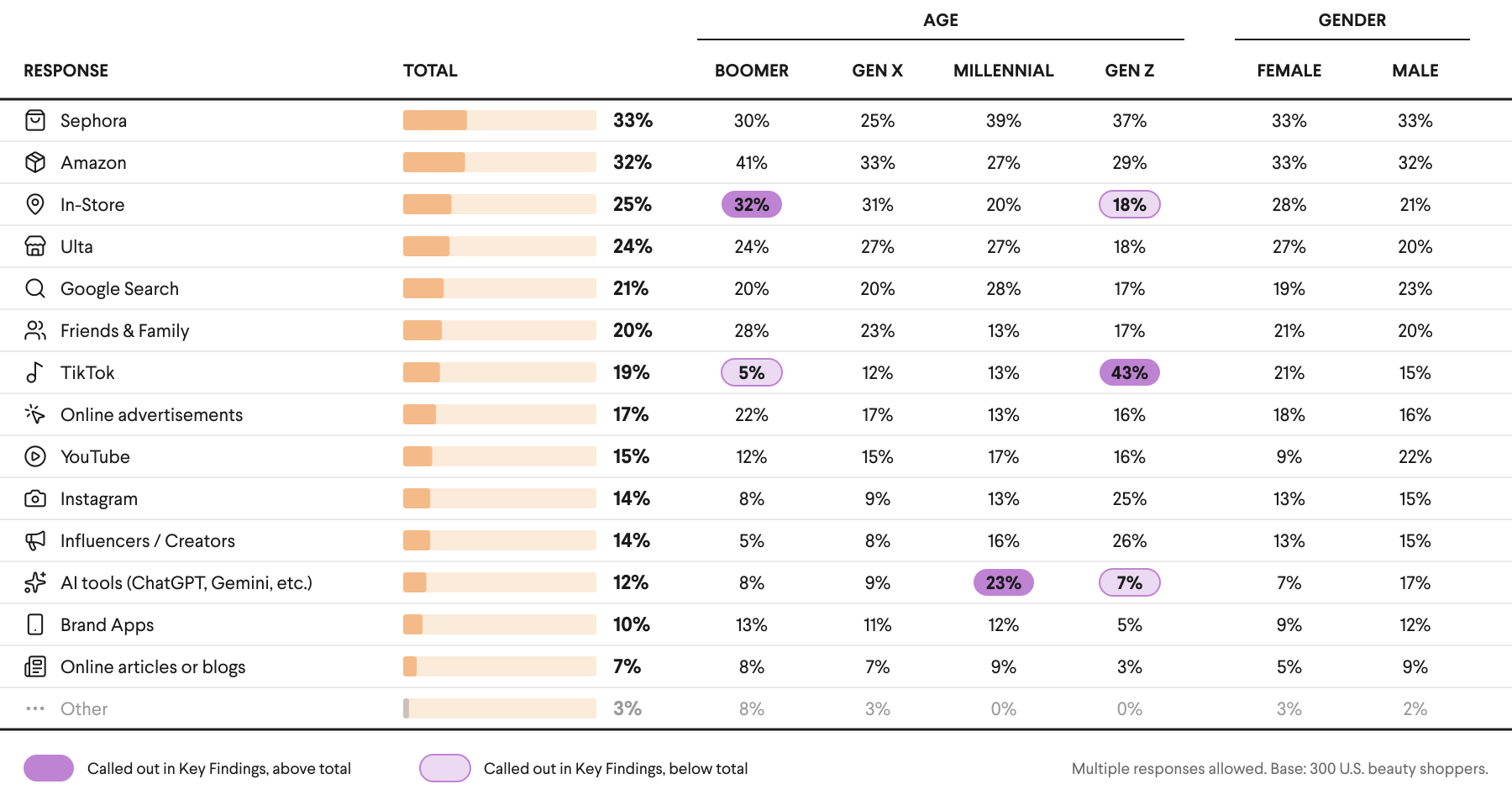
Beauty discovery now spans retailers, marketplaces, search, social and emerging AI tools. Yet the strongest overall discovery destinations are established commerce environments: one-third (33%) of surveyed beauty shoppers discover new brands through Sephora and 32% through Amazon.

Beneath that headline, discovery changes sharply by generation. TikTok reaches 43% of Gen Z, while Millennials stand out for both Google Search (28%) and AI tools such as ChatGPT and Gemini (23%). Older shoppers lean toward Amazon, in-store discovery and recommendations from friends and family.

The implication is a more complex acquisition landscape: there is no single beauty discovery funnel. Brands need to win attention across multiple environments, then recognize and respond to the intent shoppers demonstrate when they reach the brand’s own digital properties.

Key Findings

RETAILERS LEAD DISCOVERY

Sephora 33% | Amazon 32%

TIKTOK OWNS GEN Z DISCOVERY

19% overall

Gen Z 43% | Boomers 5%

AI IS EMERGING WITH MILLENNIALS

12% overall

Millennials 23% | Gen Z 7%

DISCOVERY SHIFTS OFFLINE WITH AGE

In-store 25% overall

Gen Z 18% | Boomers 32%

What It Means: Turn Fragmented Discovery Into Recognizable Intent

Beauty brands cannot control where discovery starts, but they can get smarter about what happens next. As shoppers arrive from TikTok, search, AI, retailers and other sources, the opportunity is to make those fragmented discovery journeys more connected.

Recognizing returning shoppers and understanding the behaviors and intent they demonstrate on-site can help brands respond with more relevant experiences across email, text and other owned channels. Rather than treating every visit as a new interaction, brands can build on what shoppers have already shown them, creating a more continuous path from discovery to first purchase while making better use of the audiences they have worked to acquire.

Q02-discovery


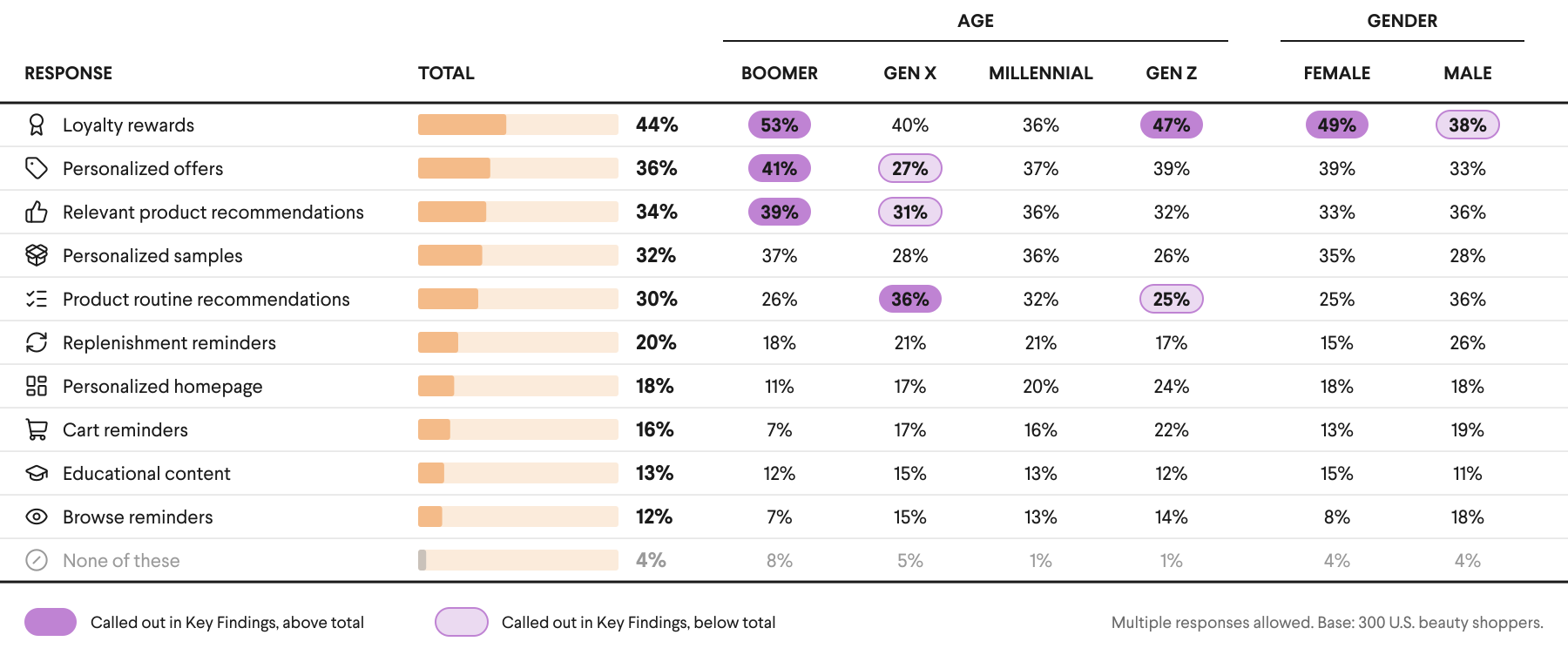
Beauty Shoppers Value Personalization Most When There’s Something in It for Them

Beauty shoppers place the greatest value on personalization that delivers a clear benefit. Loyalty rewards lead at 44%, followed by personalized offers (36%), relevant product recommendations (34%) and personalized samples (32%). Product routine recommendations also resonate with 30%.

The pattern suggests shoppers are not looking for personalization simply for the sake of a tailored experience. They value experiences that help them save money, choose the right products or get more from their relationship with a brand. Only 4% say none of the personalized experiences listed create value.

Key Findings

Loyalty Rewards

Overall: 44%

 Gen Z 47% | Boomers 53%

Male 38% | Female 49%

Personalized Offers

Overall: 36%

Gen X 27% | Boomers 41%

Relevant Product Recommendations

Overall: 34%

Gen X 31% | Boomers 39%

Product Routine Recommendation

Overall: 30%

Gen Z 25% | Gen X 36%

What It Means: Make Personalization Tangible

For beauty brands, the strongest personalization connects customer understanding to a clear shopper outcome. Recognizing purchase history, preferences and behavior can help brands surface the right reward, offer, recommendation or routine rather than simply changing the appearance of the experience.

This also helps explain why identity matters. The more effectively a brand can recognize returning shoppers and understand their intent, the greater its opportunity to deliver personalization that feels useful rather than cosmetic.

Q04-personalization-value

Which shopping experiences frustrate you the most?
 

When Beauty Brands

Fail to Remember, Shoppers Notice 


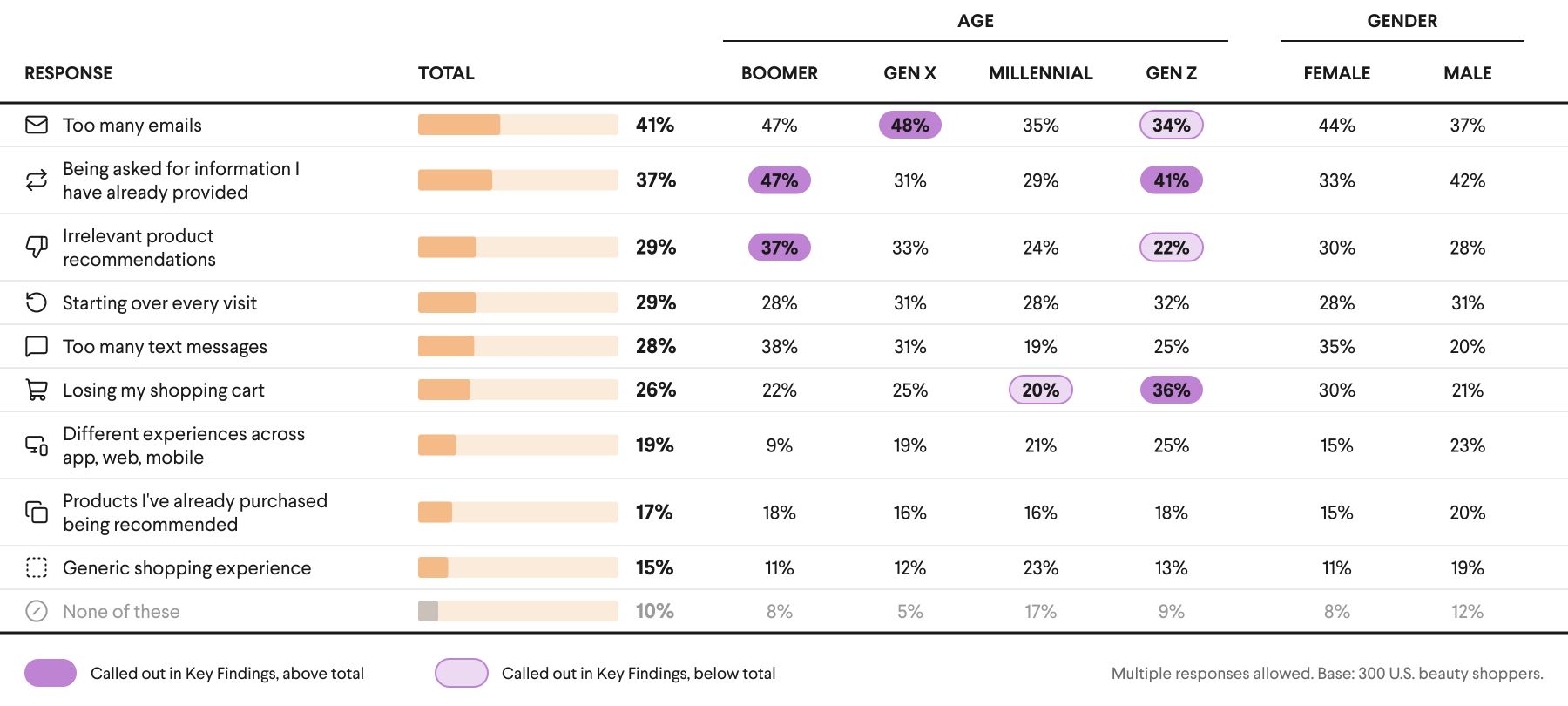
Beauty shoppers are frustrated by experiences that fail to carry context from one interaction to the next. More than a third (37%) dislike being asked for information they have already provided, while 29% are frustrated by having to start over every visit and 26% by losing their shopping cart. Irrelevant product recommendations frustrate another 29%. These frustrations share a common thread: a lack of recognition. Shoppers expect brands to retain enough context to make subsequent interactions easier and more relevant. Message volume compounds the problem, with 41% citing too many emails, suggesting that when brands fail to recognize intent and history, additional communication can quickly become noise.


  • 2026-State-of-Beauty-Ecommerce-Content-1920x1080-02

Key Findings

Too Many Emails

Overall 41%:

Gen Z 34% | Gen X 48%

Repeating Information

Overall: 37%

Gen Z 41% | Boomers 47%

Irrelevant Recommendations

Overall: 29%

Gen Z 22% | Boomers 37%

Losing Shopping Cart

Overall: 26%

Gen Z 36% | Millennials 20%

What It Means: Make Recognition the Antidote to Message Fatigue

The answer to message fatigue is not simply sending less, it is making each interaction earn its place. Better customer recognition can connect behavior and intent across visits, helping brands understand what a shopper has browsed, bought or already told them. Those signals can inform more relevant triggered email and text experiences, while suppressing messages that add little value. The goal is fewer disconnected touches and a more continuous customer journey, where shoppers feel remembered rather than repeatedly marketed to.


Which shopping experiences frustrate you the most?
Q05-frustrations


Which one would make you more likely to complete a purchase?

Personalization Is a Stronger Conversion Lever for Younger BeautyShoppers

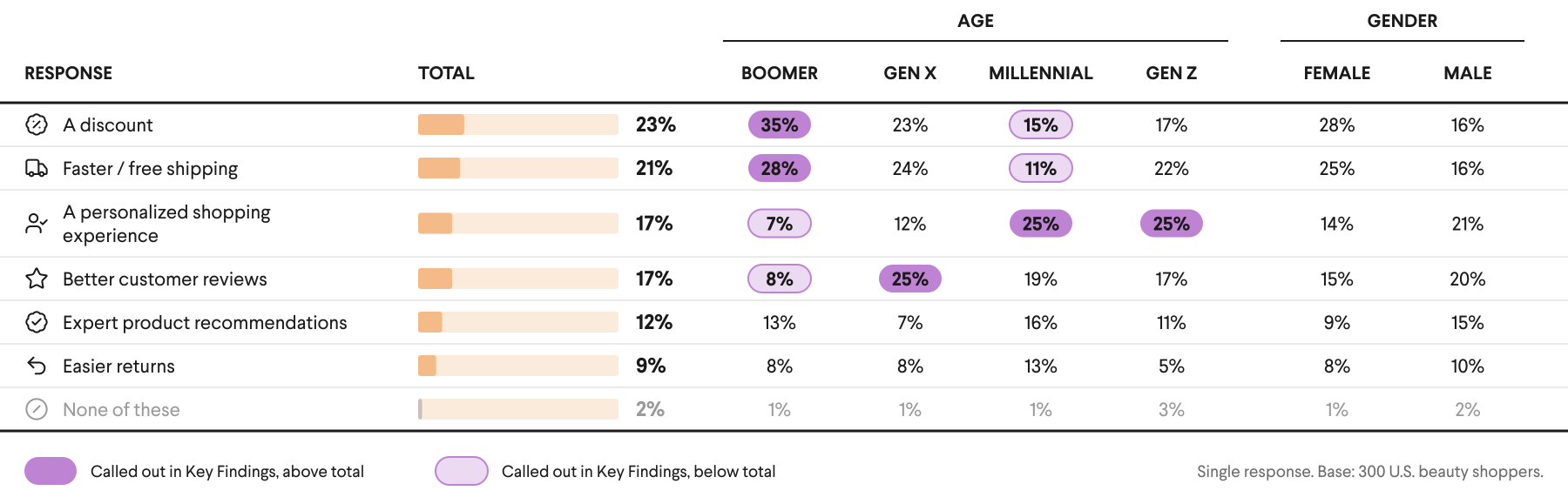
Personalization has a clear generational skew when it comes to completing a beauty purchase. One-quarter (25%) of both Gen Z and Millennials say a personalized shopping experience is their top conversion lever, ahead of discounts, compared with 12% of Gen X and just 7% of Boomers.

For older shoppers, more tangible conversion incentives take precedence. Discounts rise from 17% among Gen Z and 15% among Millennials to 35% among Boomers, while faster or free shipping reaches 28% among Boomers. Personalization plays a particularly important role in converting younger beauty shoppers, while older generations are more responsive to immediate value and convenience.

2026-State-of-Beauty-Ecommerce-Content-1920x800-03


Key Findings

Personalized Shopping Experience

Overall 17%

Gen Z 25% | Millennials 25% | Boomers 7%

Discount

Overall 23%

Millennials 15% | Boomers 35%

Faster/Free Shipping

Overall 21%

Millennials 11% | Boomers 28%

Better Customer Reviews

Overall 17%

Millennials 11% | Boomers 28%

What It Means: Recognize the Shopper to Choose the Right ConversionLever

Your conversion strategy should be as personalized as your customers' beauty preferences. A discount may help close one purchase, while another shopper may respond more strongly to personalization, reviews or faster shipping. Better customer recognition can help brands use identity, behavior and intent to understand what a shopper has viewed, purchased and engaged with, then deliver a more relevant experience as they approach purchase.
For beauty brands, the opportunity is not simply to personalize more or discount more. It is to use customer context to determine which conversion lever is most relevant, creating more adaptive journeys rather than relying on one-size-fits-all promotions and messaging. This supports a broader shift from static experiences toward customer-level engagement informed by real-time identity and behavioral signals.
Which one would make you more likely to complete a purchase?

Have you ever used an AI tool such as ChatGPT, Gemini or a beauty brand's AI assistant to research or shop for beauty products?
Q07-purchase-completion

AI Is Already Part of the Beauty Shopping Journey

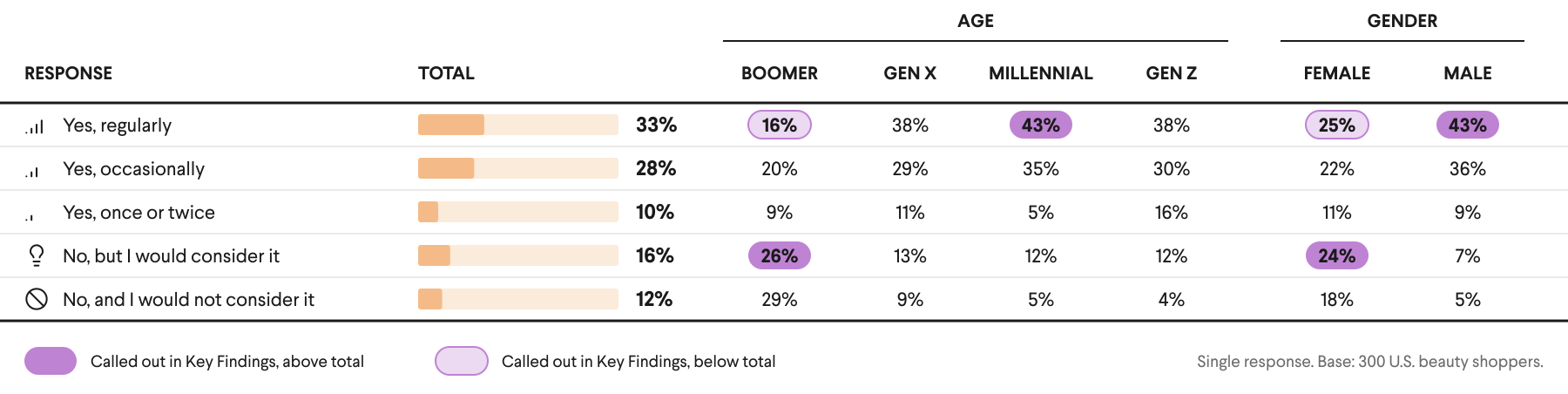
 AI-powered beauty shopping is no longer a fringe behavior among these beauty eCommerce shoppers. A third (33%) say they regularly use tools such as ChatGPT or a beauty brand’s AI assistant to research or shop for beauty products, while another 28% use them occasionally. Including those who have experimented once or twice, 71% report some experience with AI for beauty shopping.

Adoption is particularly strong among Millennials: 43% use AI regularly and 35% occasionally. Boomers are more hesitant, with 29% saying they would not consider using it. Gender differences are also pronounced: 43% of men report regular use compared with 25% of women. The findings suggest AI has already established a role in beauty research and shopping, but adoption is far from uniform.

2026-State-of-Beauty-Ecommerce-Content-1920x800-03


Key Findings

Regular AI Users

Overall 33%

Millennials 43% | Boomers 16%

Regular or Occasional Use

Overall 61%

Millennials 78% | Boomers 36%

Open to AI

16% have not used it but would consider it

Boomers 26% | Women 24%

Gender Divide

Regular Use:

Men 43% | Women 25%

Have you ever used an AI tool such as ChatGPT, Gemini or a beauty brand's AI assistant to research or shop for beauty products?
Q08-ai-usage


Trust in AI Starts With Recognition and Explanation

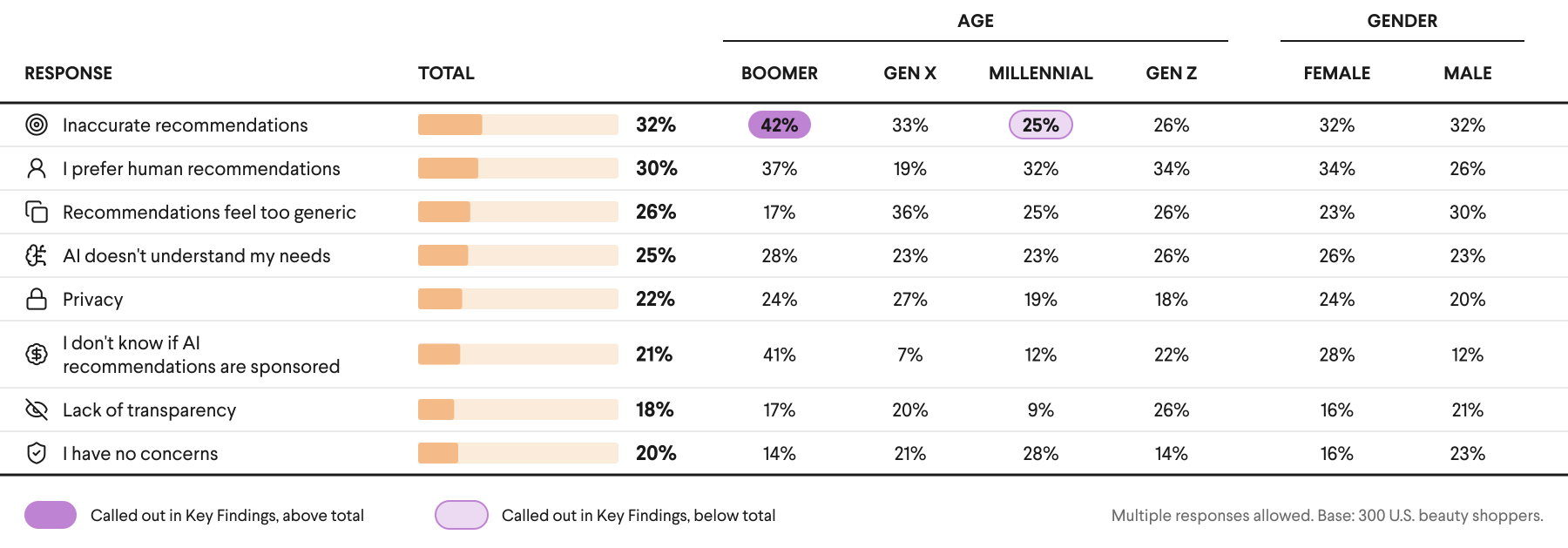
Beauty shoppers’ concerns about AI are rooted primarily in whether it can make recommendations they can rely on. Inaccurate recommendations are the leading concern at 32%, followed by a preference for human recommendations at 30%. Another 26% worry AI recommendations will feel too generic, while 25% question whether AI understands their needs.

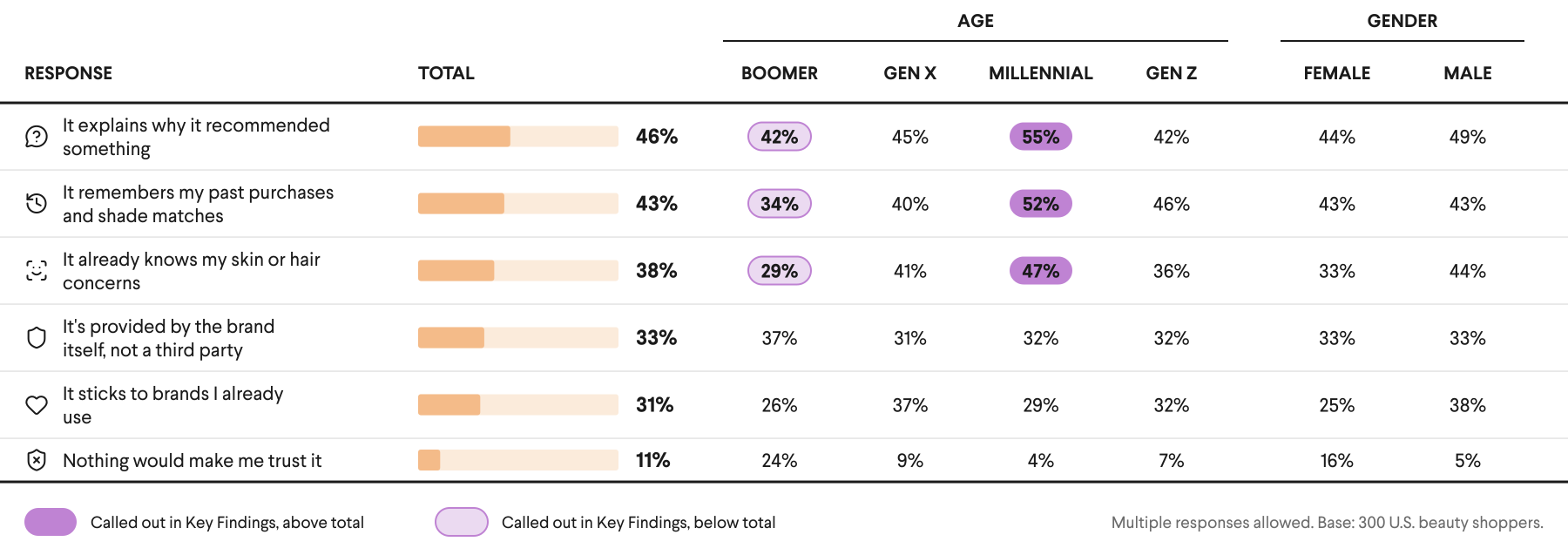
What builds trust is revealing. Nearly half (46%) would be more likely to trust an AI shopping assistant if it explained why it made a recommendation. Recognition is nearly as important: 43% want AI to remember past purchases and shade matches, while 38% want it to know their skin or hair concerns. The findings suggest trusted AI in beauty will depend on more than sophisticated models, it needs customer context and the ability to make its decisions understandable.

Key Findings

Explain The Recommendation

46% say this would build trust

Millennials 55% | Boomers 42%

Remember Purchases & Shade Matches

Overall 43%

Millennials 52% | Boomers 34%


Know Skin & Hair Concerns

Overall 38%

Millennials 47% | Boomers 29%

Inaccuracy is the #1 Concern

Overall 32%

Millennials 25% | Boomers 42%

What It Means: Give AI the Customer Context to Be Useful

For beauty brands, better AI starts with better recognition. Connecting identity with permissioned customer information, purchase history and behavioral signals can provide the context needed to move beyond generic recommendations toward experiences grounded in what shoppers have actually bought, browsed and told the brand. But relevance alone is not enough: shoppers also want to understand why something is being recommended.

As brands build more adaptive, AI-powered journeys, customer context and transparency should work together, making AI feel less like a black box and more like a useful extension of the relationship shoppers already have with the brand.

What concerns you most about AI-powered shopping experiences?

Q10-ai-concerns


What would make you trust an AI shopping assistant with a beauty purchase?
Q11-ai-trust

Where Are Beauty Shoppers Comfortable Using AI, and How Much Control Will They Give It?

Beauty Shoppers Are More Comfortable With AI Assistance Than AI Autonomy

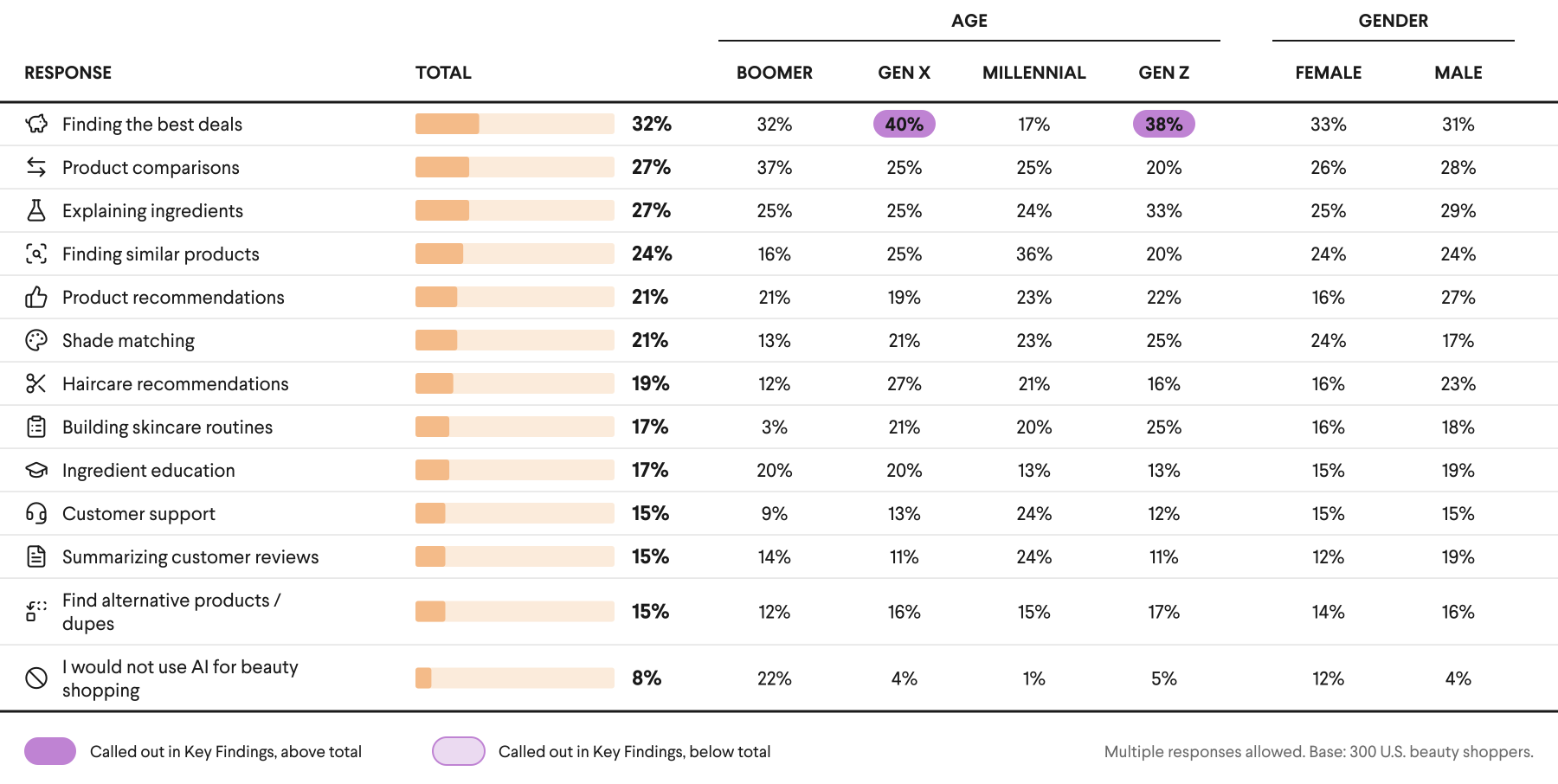
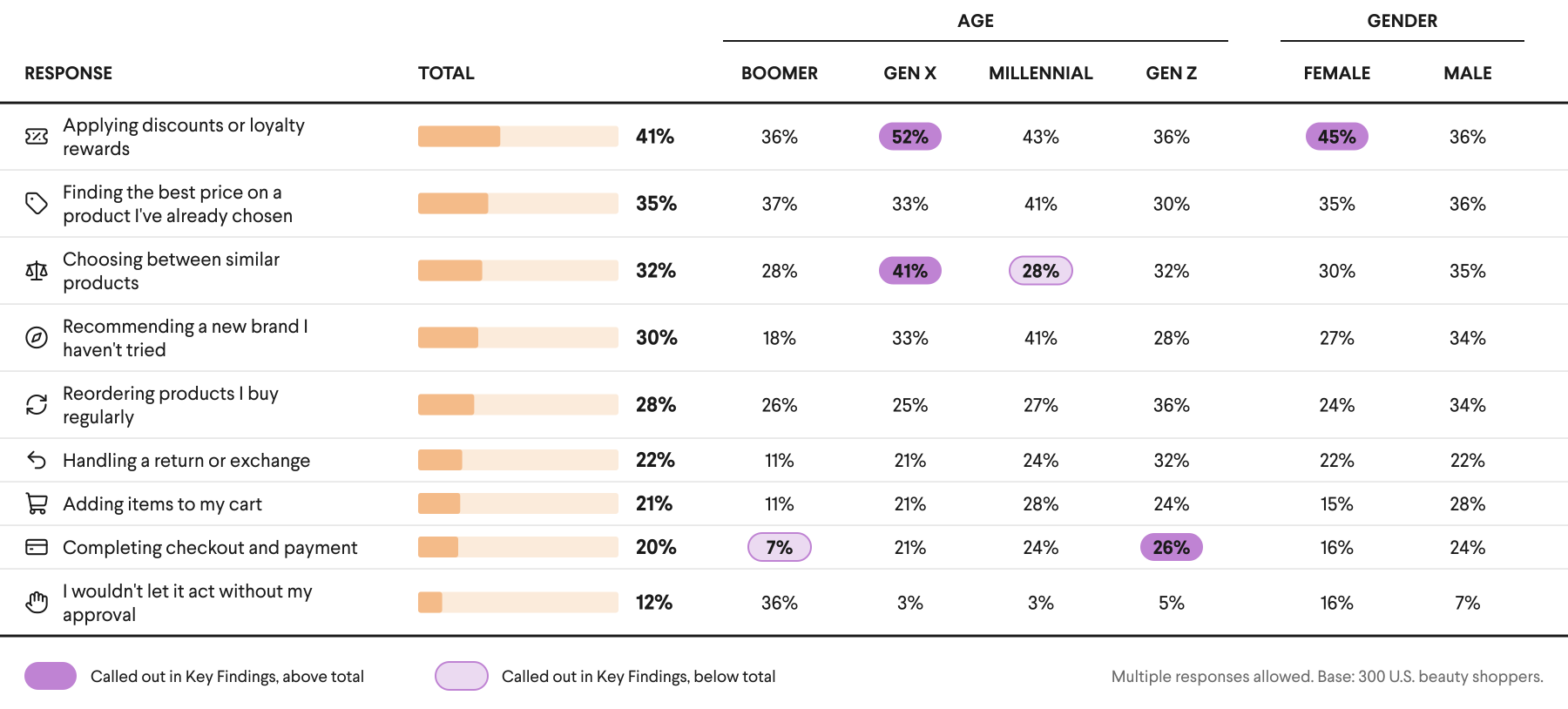
Beauty shoppers appear most comfortable using AI to reduce the work of researching and evaluating products. Finding the best deals is the leading AI shopping use case at 32%, while product comparisons and ingredient explanations both reach 27%. But when AI moves from advising to acting, shoppers become more selective.
The clearest exception is when automation delivers an obvious benefit: 41% would let AI apply discounts or loyalty rewards without approval. Around a third would allow it to find the best price on a chosen product (35%) or choose between similar products (32%). Only 20%, however, would hand over checkout and payment. The findings point to an emerging boundary for agentic commerce: shoppers are open to AI doing more of the work, but are less ready to relinquish control over the final transaction.

Key Findings

Finding the Best Deals

32% comfortable using AI

Gen Z 38% | Gen X 40%


Applying Discounts & Rewards

41% would allow it without approval

Gen X 52% | Female 45%


Choosing Between Products

32% would allow it without approval

Gen X 41% | Millennials 28%

Completing Checkout & Payment

20% would allow it without approval

Gen Z 26% | Boomers 7%

What It Means: Automate Around Intent, Not Instead of It

The near-term opportunity for AI is to remove friction around decisions shoppers have already signaled they want to make. Customer identity and real-time behavioral signals can provide the context to understand the products someone is considering, while AI can help surface relevant comparisons, offers or loyalty benefits at the right moment.

More autonomous experiences can build from there, but the data suggests brands should preserve shopper control as the stakes increase. The goal is not autonomy for its own sake, but a more adaptive journey that makes acting on customer intent easier.

Which beauty shopping tasks are you most comfortable using AI for?

Q09-ai-tasks


If an AI assistant could shop for beauty products on your behalf, which tasks would you let it handle without approving each one?
Q12-ai-autonomy


Which beauty shopping tasks are you most comfortable using AI for?

Loyalty Is Built on Benefits,but Recognition Helps Sustainthe Relationship

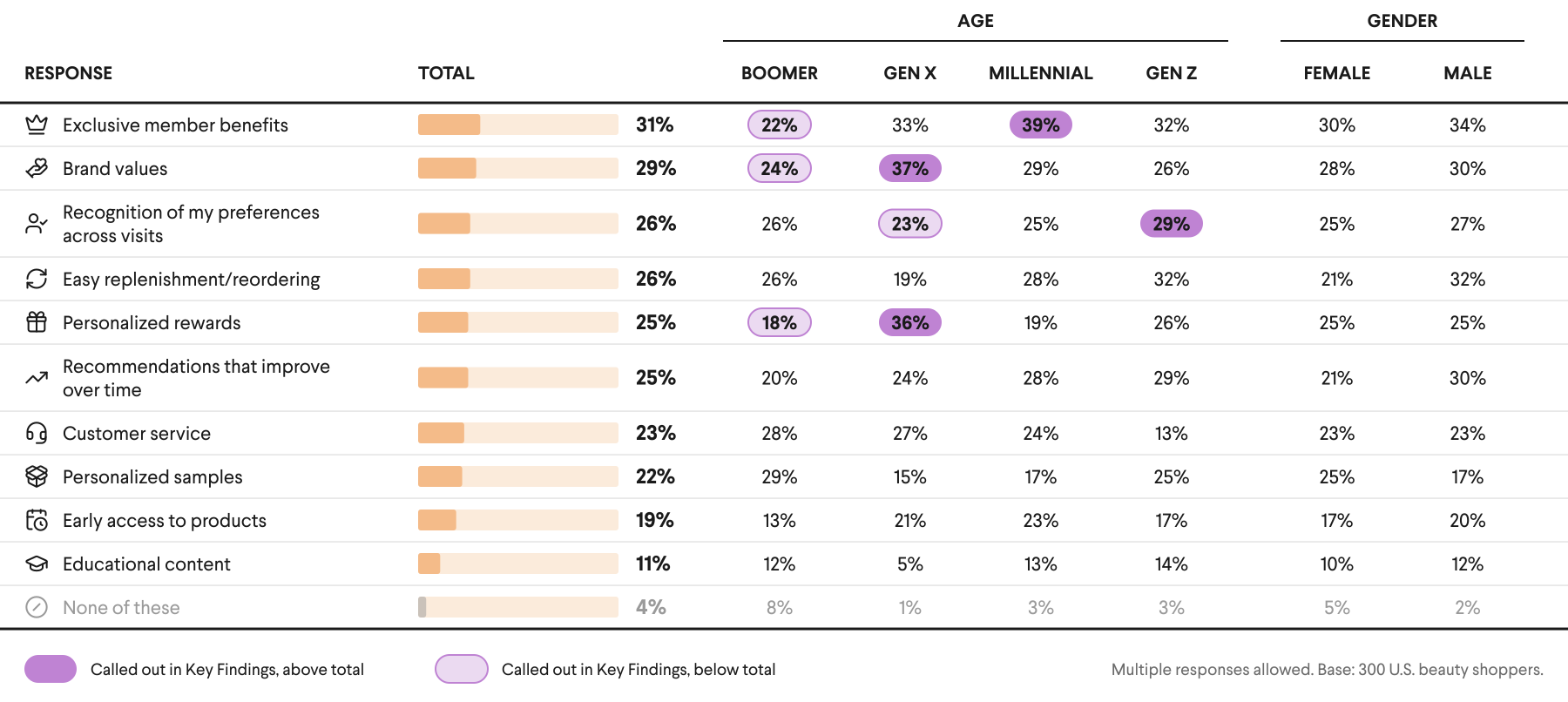
Beauty shoppers point to a mix of tangible benefits and more personalized experiences as reasons to return to the same brand. Exclusive member benefits lead overall at 31%, followed closely by brand values at 29%. Recognition also matters: 26% value brands recognizing their preferences across visits, while 25% say recommendations that improve over time and 25% personalized rewards keep them coming back.
There are notable generational differences. Millennials are particularly drawn to exclusive member benefits (39%), while Gen X stands out for personalized rewards (36%) and brand values (37%). Gen Z is more likely than Gen X to value easy replenishment and reordering (32% vs. 19%), suggesting convenience can also play an important role in maintaining the relationship.

Key Findings

Exclusive Member Benefits

Overall 31%

Millennials 39% | Boomers 22%

Brand Values

Overall 29%

Gen X 37% | Boomers 24%

Recognition Across Visits

Overall 26%

Gen Z 29% | Gen X 23%

Personalized Rewards

Overall 25%

Gen X 36% | Boomers 18%

What It Means: Turn Recognition Into a Reason to Return

Loyalty is not driven by rewards alone. Beauty shoppers also value experiences that improve as the relationship develops, from remembering preferences to making better recommendations and simplifying replenishment. For brands, customer recognition can help connect behavior and intent across visits so returning shoppers do not receive the same experience as first-time visitors.

Purchase history, preferences and ongoing browsing behavior can inform more relevant recommendations, rewards and replenishment journeys.

The opportunity is to make loyalty feel cumulative: each interaction should give the brand more context to make the next one more useful, strengthening the customer relationship rather than simply adding more promotions.

What keeps you coming back to the same beauty brand?
Q13-loyalty


Which information are you comfortable with a beauty brand using to personalize your shopping experience?
Beauty Shoppers Are Comfortable

With Personalization When It Uses

Relevant Customer Data

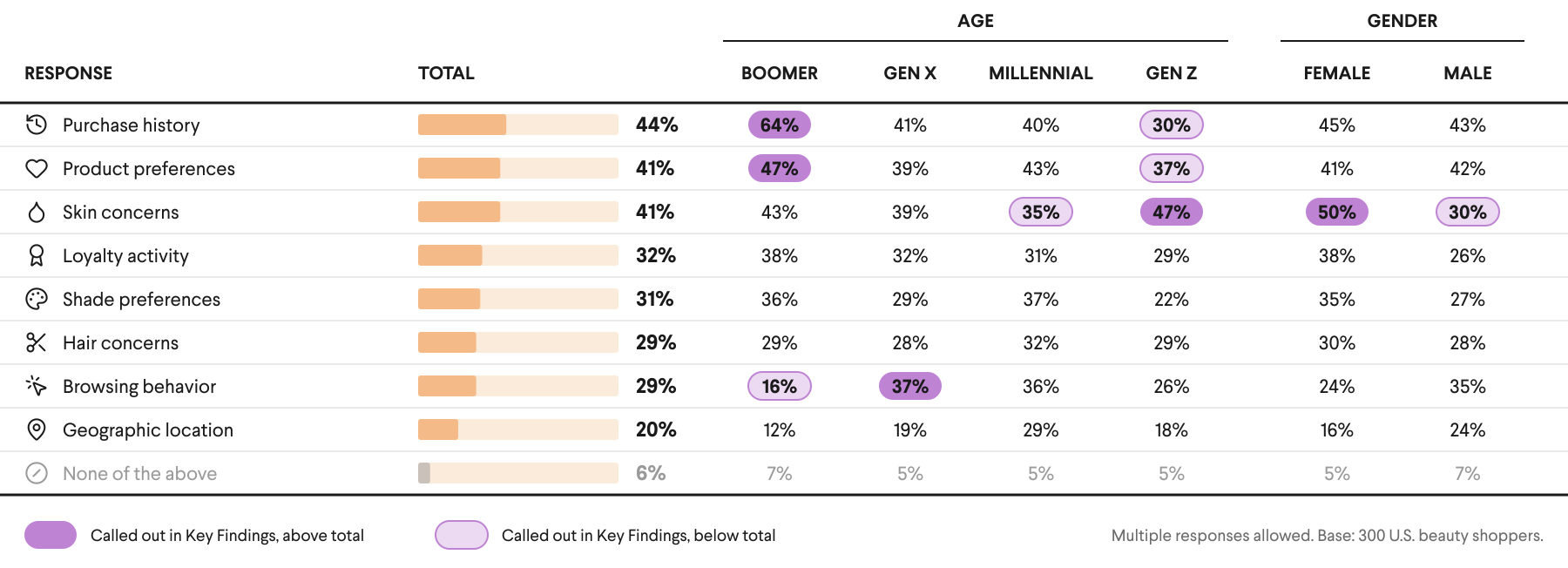
Beauty shoppers show considerable openness to brands using information that directly relates to their needs and existing relationship with the brand. Purchase history leads at 44%, while product preferences and skin concerns are each selected by 41%. Loyalty activity (32%) and shade preferences (31%) also provide potential inputs for personalization.

Comfort varies depending on both the shopper and the type of information. Boomers are particularly comfortable with brands using purchase history (64%), while Gen Z is much more comfortable sharing skin concerns (47%) than purchase history (30%). Browsing behavior attracts less overall comfort at 29%, suggesting shoppers may distinguish between information they have explicitly provided or generated through purchases and more passive behavioral signals


Key Findings

Purchase History

Overall 44%

Gen Z 30% | Boomers 64%

Skin Concerns

Overall 41%

Millennials 35% | Gen Z 47%

Female 50% | Male 30%

Product Preferences

Overall 41%

Gen Z 37% | Boomers 47%


Browsing Behavior

Overall 29%

Gen X 37% | Boomers 16%


What It Means: Personalization Needs a Clear Value Exchange

Shoppers are not rejecting the use of customer data for personalization: only 6% select none of the options, but their comfort is not uniform. The strongest permission appears around information with an intuitive connection to a better beauty experience, what shoppers have purchased, the products they prefer and the concerns they want to address.

For beauty brands, the opportunity is to build permissioned customer profiles that connect these preferences with identity and behavioral signals, while being thoughtful about how different types of data are used.

The goal should be personalization shoppers can understand and benefit from: remembering what they buy, recognizing their beauty needs and using that context to make subsequent experiences more relevant rather than collecting data without an obvious customer benefit.

Which information are you comfortable with a beauty brand using to personalize your shopping experience?

Q15-data-comfort


Looking ahead, what do you think will have the biggest impact on beauty ecommerce over the next three years?

AI Is Expected to Reshape

Beauty Ecommerce,

Especially Among Millennials

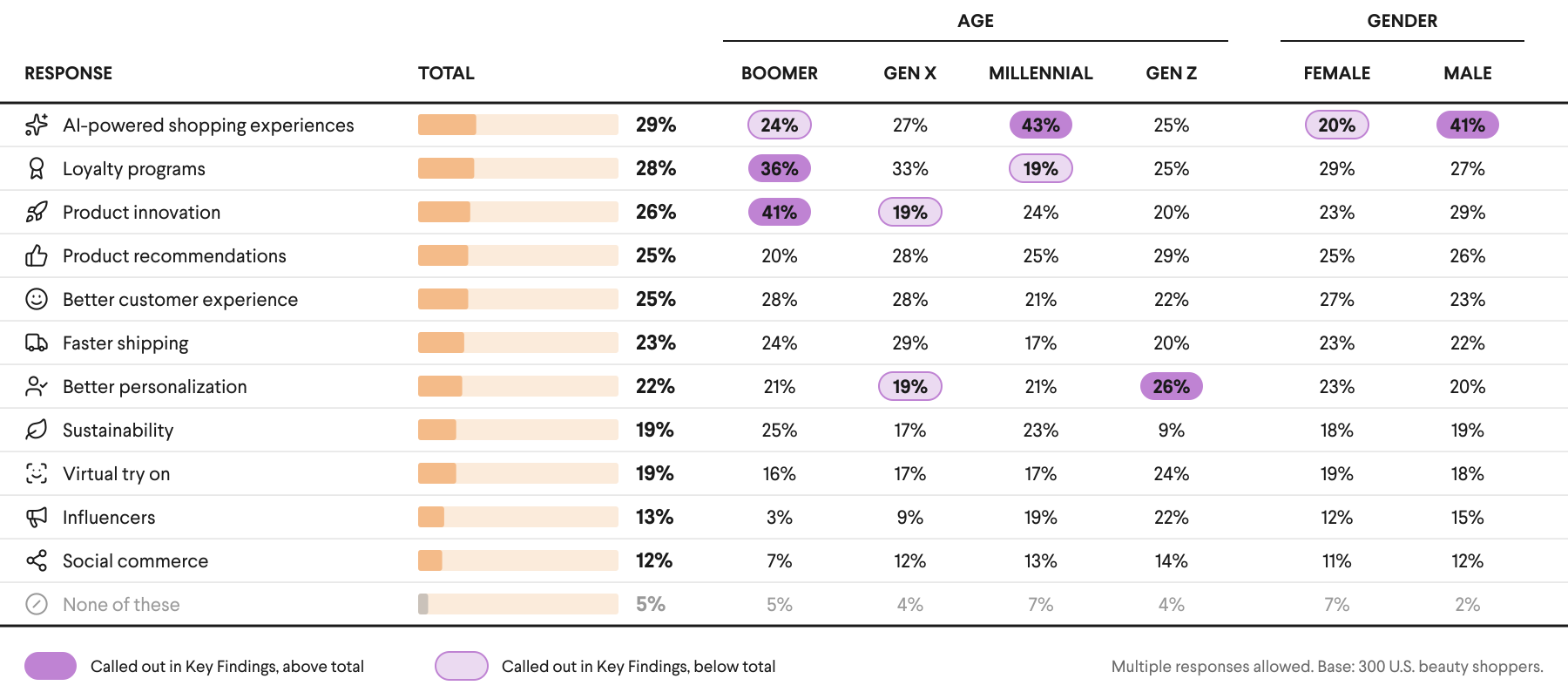
AI-powered shopping experiences emerge as the top expected influence on beauty ecommerce over the next three years, selected by 29% of beauty shoppers. Loyalty programs follow closely at 28%, with product innovation at 26% and product recommendations and better customer experience both at 25%. But expectations around AI vary sharply by audience. 43% of Millennials expect AI-powered shopping experiences to have a major impact, compared with 25% of Gen Z, 27% of Gen X and 24% of Boomers. Men are also twice as likely as women to point to AI, at 41% versus 20%. AI is becoming part of shoppers’ expectations for the future of beauty ecommerce, but it is one of several forces shoppers expect to shape the category, and enthusiasm is far from uniform across audiences.


Key Findings

AI-Powered Shopping Experiences

Overall 29%

Millennials 43% | Boomers 24%

Male 41% | Female 20%

Loyalty Programs

Overall 28%

Millennials 19% | Boomers 36%

Product Innovation

Overall 26%

Gen X 19% | Boomers 41%

Better Personalization

Overall 22%

Gen Z 26% | Gen X 19%

What It Means: The Future of Beauty Ecommerce Will Not Be AI Alone

AI has the strongest overall showing, but shoppers expect the next phase of beauty ecommerce to be shaped by a combination of smarter technology and stronger customer fundamentals. Loyalty, product innovation, recommendations and customer experience all sit close behind. For brands, that suggests AI should not be treated as a standalone experience.
Its value will depend on whether it makes shopping demonstrably more useful, helping brands recognize customer needs, improve recommendations and deliver more relevant experiences. The opportunity is to use AI alongside identity, behavior and intent to make customer journeys increasingly adaptive, while retaining the value, convenience and experience shoppers already prioritize.

Looking ahead, what do you think will have the biggest impact on beauty ecommerce over the next three years?

Q16-future-impact

Conclusion

The State of Beauty Ecommerce reveals a customer journey that is becoming more fragmented, personalized and increasingly influenced by AI. Beauty shoppers discover brands across retailers, search, social platforms and creators, but what ultimately earns a purchase and a lasting relationship is more fundamental: value, relevance, convenience and an experience that recognizes them. Winning in this environment does not mean personalizing everything. It means understanding where personalization creates meaningful value. Shoppers expect brands to remember previous purchases, favorite products and recently viewed items. They value rewards, relevant offers and recommendations, while becoming frustrated when they have to repeat information, restart journeys or receive too many messages. That puts identity, behavioral insight and customer context at the center of the opportunity. Recognition can help beauty brands connect interactions across visits, understand evolving intent and determine what an individual shopper needs next. For some, that may be a relevant recommendation or routine; for others, a discount, faster shipping, replenishment reminder or loyalty benefit. AI raises the stakes. Beauty shoppers are already using AI for research and shopping, but greater adoption does not mean unlimited trust. Shoppers want AI to explain its recommendations, remember relevant customer context and preserve control as it moves from advising to acting. The brands that succeed with AI will be those that make intelligence useful and transparent rather than simply more autonomous. The path forward is to recognize more shoppers, connect permissioned customer data with real-time behavior and intent, and turn those signals into timely, useful experiences. The beauty brands that win will not simply be the ones that personalize more; they will be the ones that understand each shopper better, recognize what they need next and act on that understanding in ways that earn the purchase, and the next one.

Frame 1000001887