





Welcome to the Starting Grid
Every Black Friday and Cyber Monday brings a new race for revenue.
The retailers that cross the finish line strongest aren't always the ones with the biggest budgets or the deepest discounts. More often, they're the ones that arrive best prepared, understanding the conditions, anticipating the obstacles, and executing with precision when the pressure is at its highest. BFCM 2026 will be no exception.
The 2025 holiday season demonstrated that consumers are still willing to spend, but they're shopping differently. Peak season generated record online sales, mobile continued to account for the majority of eCommerce purchases, and shoppers began researching and comparing products weeks before Halloween. At the same time, acquisition costs remained high, competition for attention intensified, and new technologies, including AI-powered shopping experiences continued to reshape how consumers discover and evaluate brands.
Heading into 2026, retailers face a track that's faster, more competitive, and less predictable than ever. Consumers remain value-conscious as household budgets continue to feel the effects of prolonged economic pressure. Customer journeys span multiple devices and channels. Marketing teams are expected to deliver more personalized experiences while proving greater efficiency, all within an increasingly crowded marketplace.
That's why we've framed this guide as a race. Every successful team begins by understanding the track. They prepare for the hazards ahead, fine-tune every component before race day, and know when to use every competitive advantage to gain an edge.
The same principles apply to BFCM. Each lap of this guide explores a different stage of the journey, from understanding this year's market conditions and navigating the biggest obstacles, to building the capabilities, strategies, and execution plan needed to outperform the competition.
Because when the starting lights go out, success won't be determined by who reacts the fastest. It will belong to the retailers that prepared the smartest.
BFCM 2026 at a Glance
Before the lights go out, here's what every retailer should know heading into this year's race.
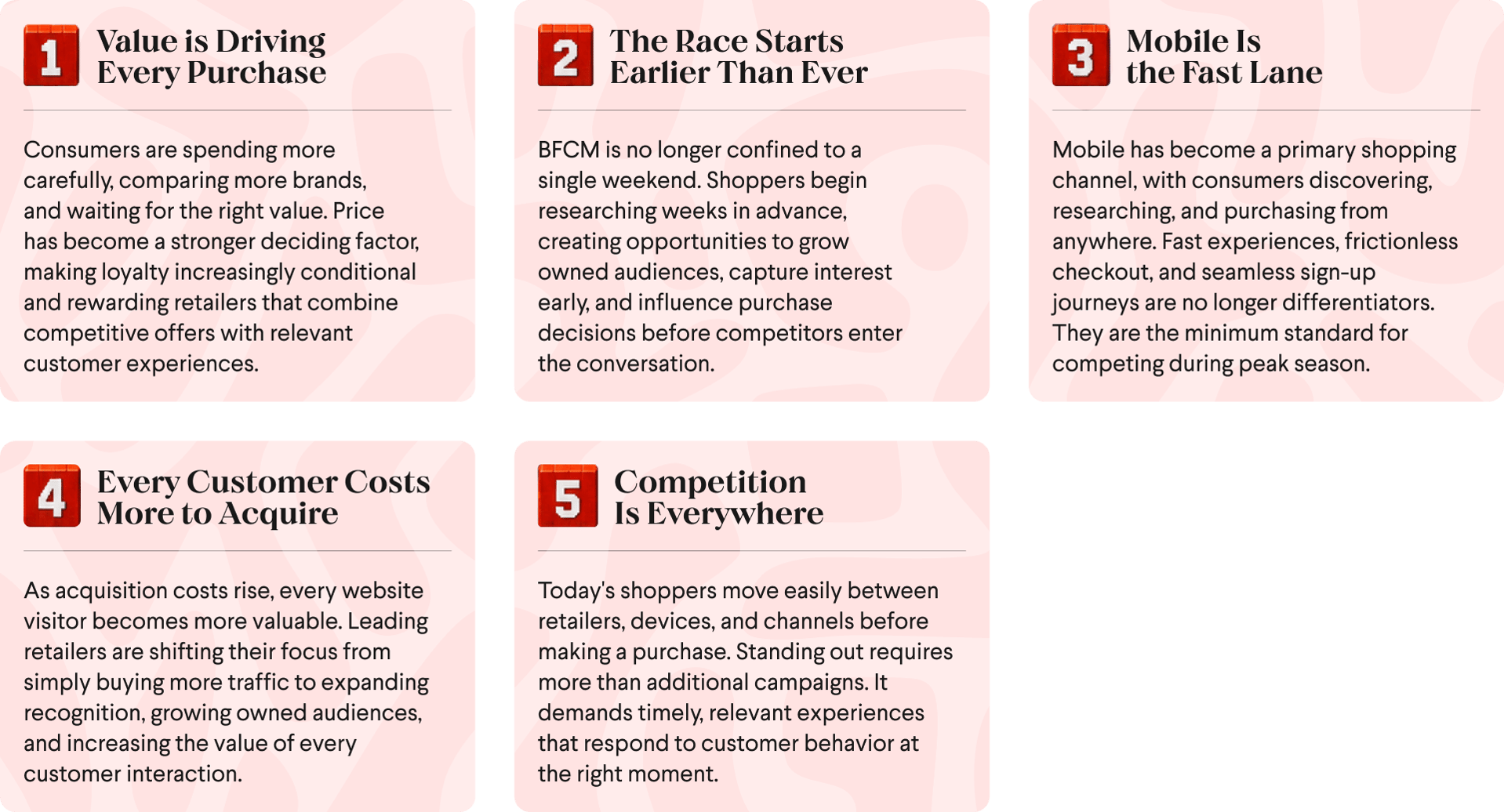
Consumers Are Still Spending, But More Carefully
Shoppers continue to spend during the holiday season, but they're taking longer to research, comparing more retailers, and waiting for the right value before making a purchase.
What it means: Relevance and timing matter just as much as price.
Mobile Is Leading the Race
More than half of online holiday purchases now happen on mobile devices, making seamless mobile experiences essential throughout the customer journey.
What it means: Every click, page load, and sign-up experience can influence conversion.
Customer Acquisition Is More Expensive
Rising media costs and increasing competition mean every website visitor is more valuable than ever.
What it means: Maximizing existing traffic is often more effective than simply buying more.
AI Is Reshaping Shopping
Consumers are increasingly using AI-powered tools to research products, compare options, and discover brands before making a purchase.
What it means: Brands need to respond faster, personalize more effectively, and optimize continuously.
Attention Is Harder to Earn
BFCM brings an unprecedented volume of marketing messages across email, SMS, paid media, and social channels.
What it means: Coordinated, relevant experiences outperform high-volume campaigns.
The Race Starts Earlier Every Year
BFCM is no longer a four-day event. Holiday shopping begins weeks before Black Friday and continues long after Cyber Monday.
What it means: The brands that build audiences and capture demand early are best positioned to win when peak traffic arrives.
Course Preview: What This Year's Track Looks Like
Every Race Starts with the Conditions
No driver arrives at the starting grid expecting the circuit to behave exactly as it did the year before. Weather changes, tires wear differently, and competitors improve. Winning depends on understanding the conditions before the lights go out. Black Friday and Cyber Monday are no different.
The fundamentals of peak trading remain familiar: consumers are looking for value, retailers are competing for attention, and every interaction has the potential to influence revenue. But the environment surrounding those moments has become more complex.
Economic pressure continues to shape purchasing decisions. Consumers are researching earlier, comparing more brands, and delaying purchases until they feel confident they are getting the right value. At the same time, retailers face rising acquisition costs, increasingly fragmented buying cycles, and more competition across every marketing channel.
Success this season won't come from spending more. It will come from spending smarter. The brands that reach the podium will be the ones that recognize buying signals earlier, build stronger owned audiences, and create relevant experiences at the moments that matter most.
Track Conditions
|
Price-sensitive consumers
Every purchase is under greater scrutiny.
Fragmented customer journeys
Shoppers move between devices, channels, and competitors with little friction.
|
Crowded inboxes
Standing out requires relevance, not simply higher send volume.
Faster buying cycles
Intent can build and disappear in a matter of minutes.
|
Understanding the track is only the beginning. The next challenge is navigating the obstacles that can slow even the best-prepared retailers.
The Obstacles Slowing Brands Down

Every Great Race Has Its Hazards
Every race presents obstacles that threaten momentum. A missed braking point, an unexpected hazard, or a poorly timed decision can quickly turn a winning position into a costly setback.
Behind every successful peak season is a series of challenges that can quietly erode performance, from anonymous visitors and rising acquisition costs to fragmented data and fierce competition for customer attention. The brands that perform best don't avoid these obstacles by chance; they prepare for them long before race day.
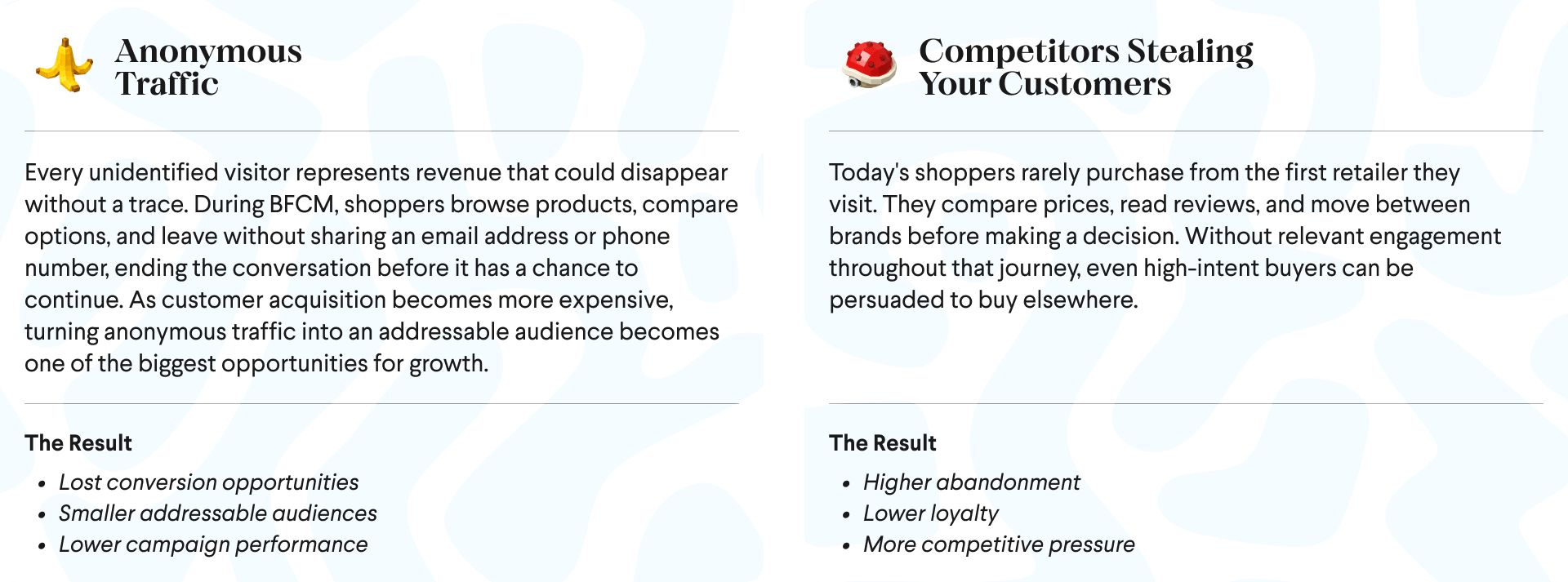
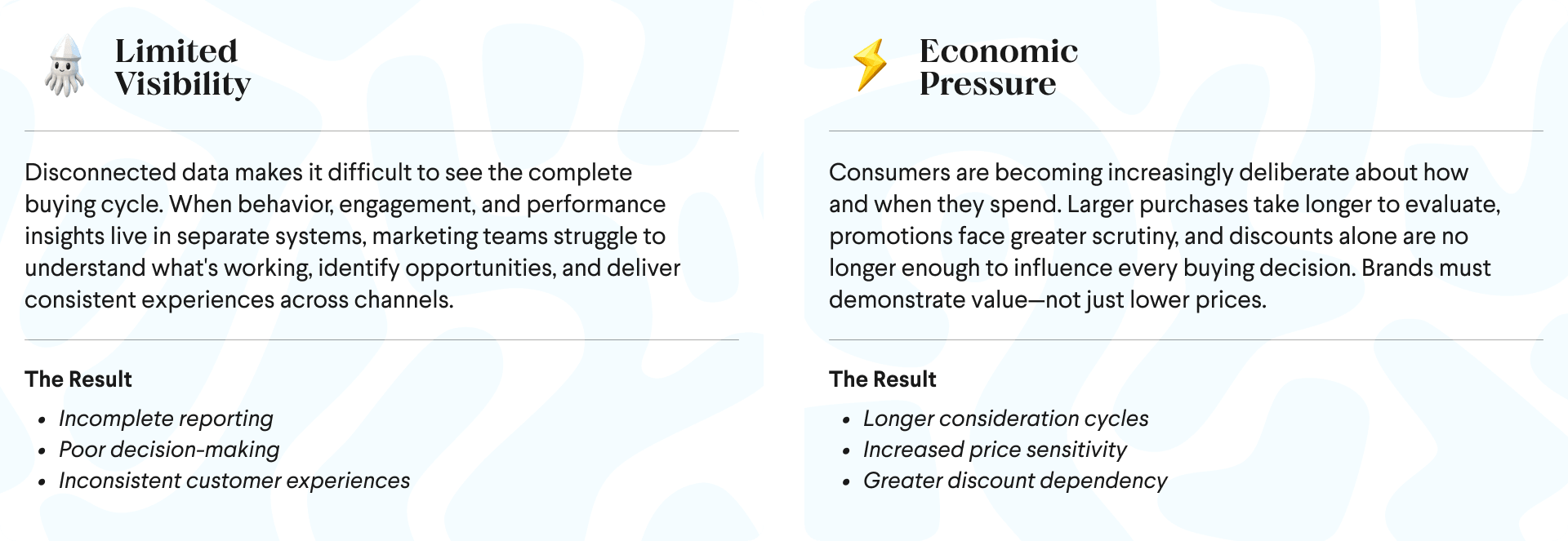
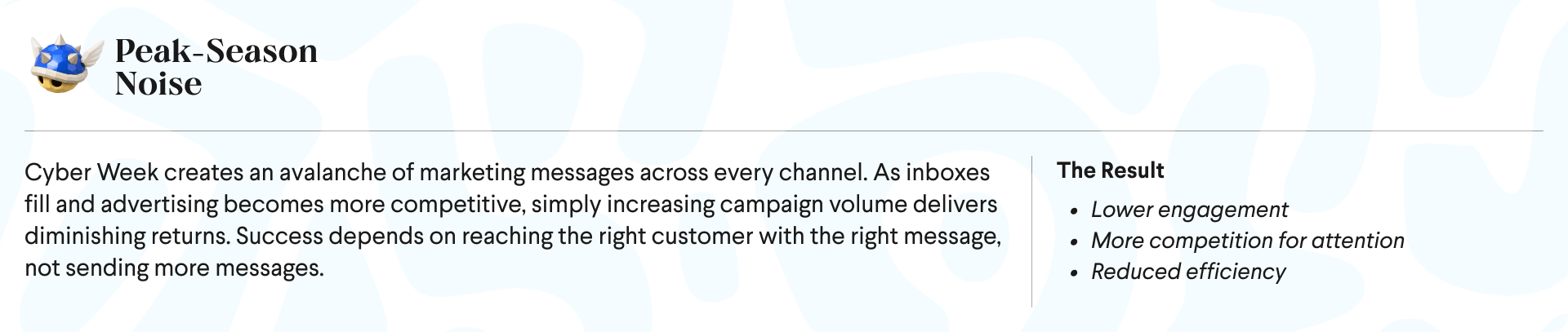
The conditions may be challenging, but they're not insurmountable. The retailers that consistently outperform during BFCM are the ones that build the right capabilities before the race begins.
Build Your Kart Before Race Day
Winning Starts Long Before the Green Light
Championships aren't won on race day. They're won through months of preparation, testing, and fine-tuning every component before the lights go out.
The most successful retailers don't rely on a single campaign or last-minute promotion. They build the capabilities that allow them to respond quickly, adapt to changing shopper behavior, and deliver exceptional customer experiences throughout peak season.
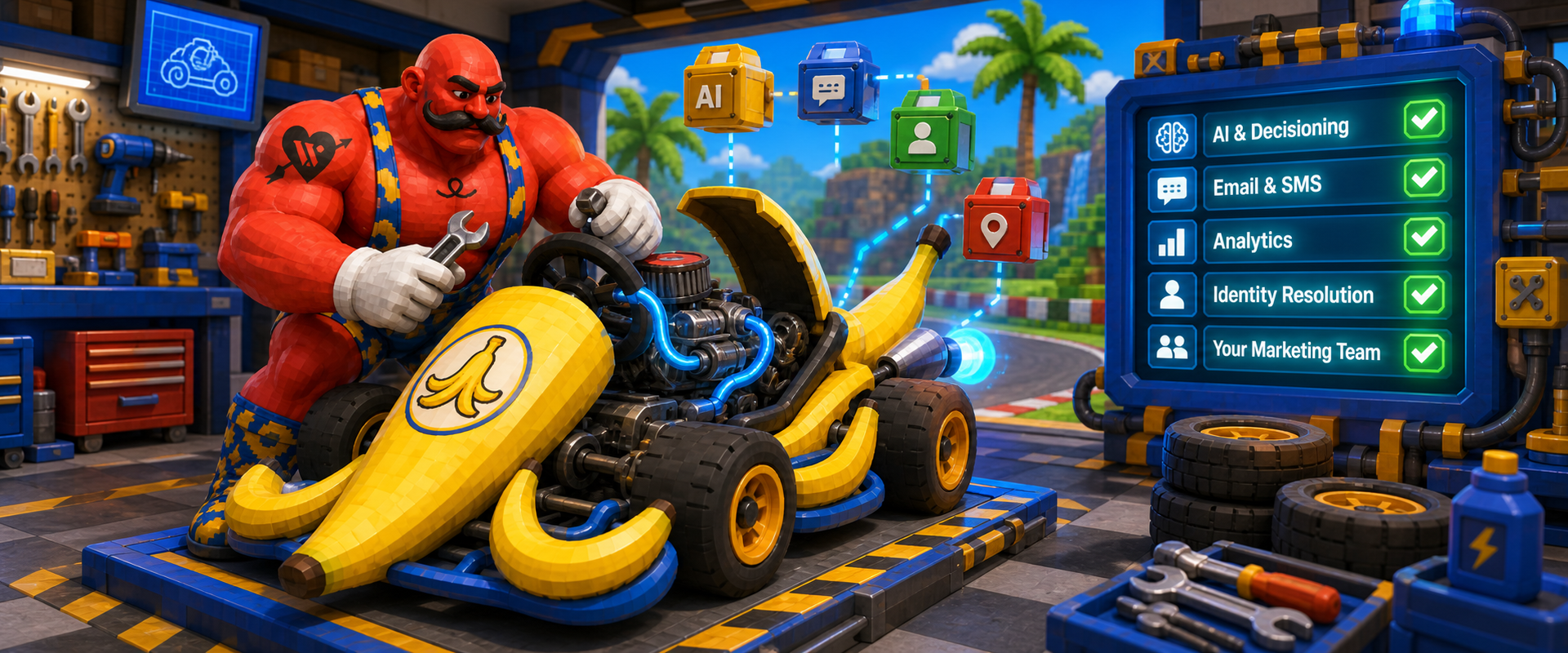
Winning isn't about adding more technology to your stack. It's about making every part of your marketing ecosystem work together to create faster decisions, better experiences, and stronger business outcomes.
The Winning BFCM Kart
A winning kart is only as strong as the components working beneath the surface. Every part has a purpose. Remove one, and the whole system becomes less effective.
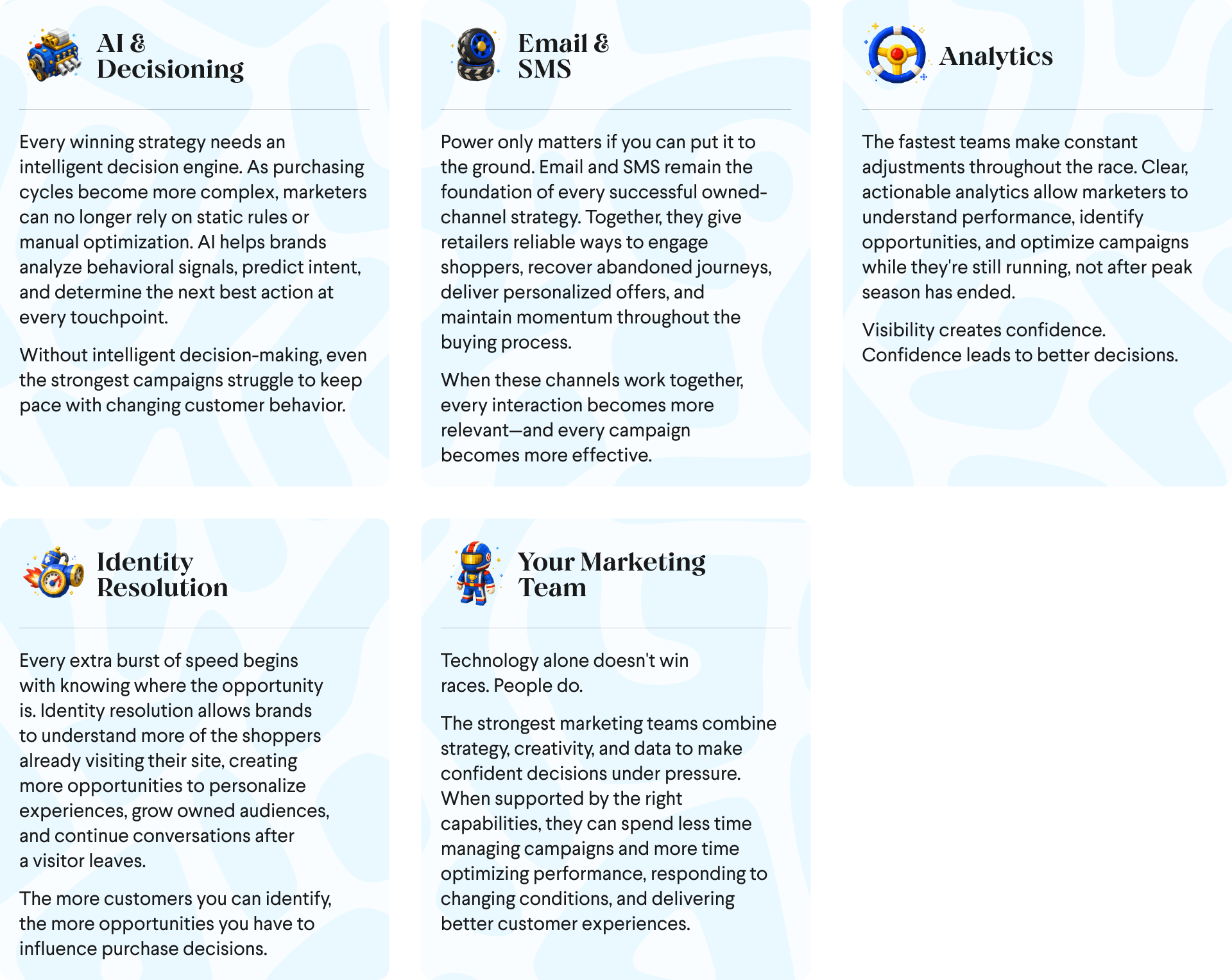
A well-built kart gives you the foundation to compete. The next step is knowing when to activate the right advantages to gain an edge over the competition.
Collect Your Power-Ups
Every Competitive Advantage Counts
No driver wins a race on speed alone. The difference between leading the pack and falling behind often comes down to using every advantage at exactly the right moment.
The highest-performing retailers don't simply react to shopper activity. They anticipate it. They connect data, channels, and decision-making to create experiences that feel timely, relevant, and effortless. When every capability works together, small advantages compound into meaningful revenue gains.
These are the capabilities that give leading retailers a competitive edge when every interaction matters.
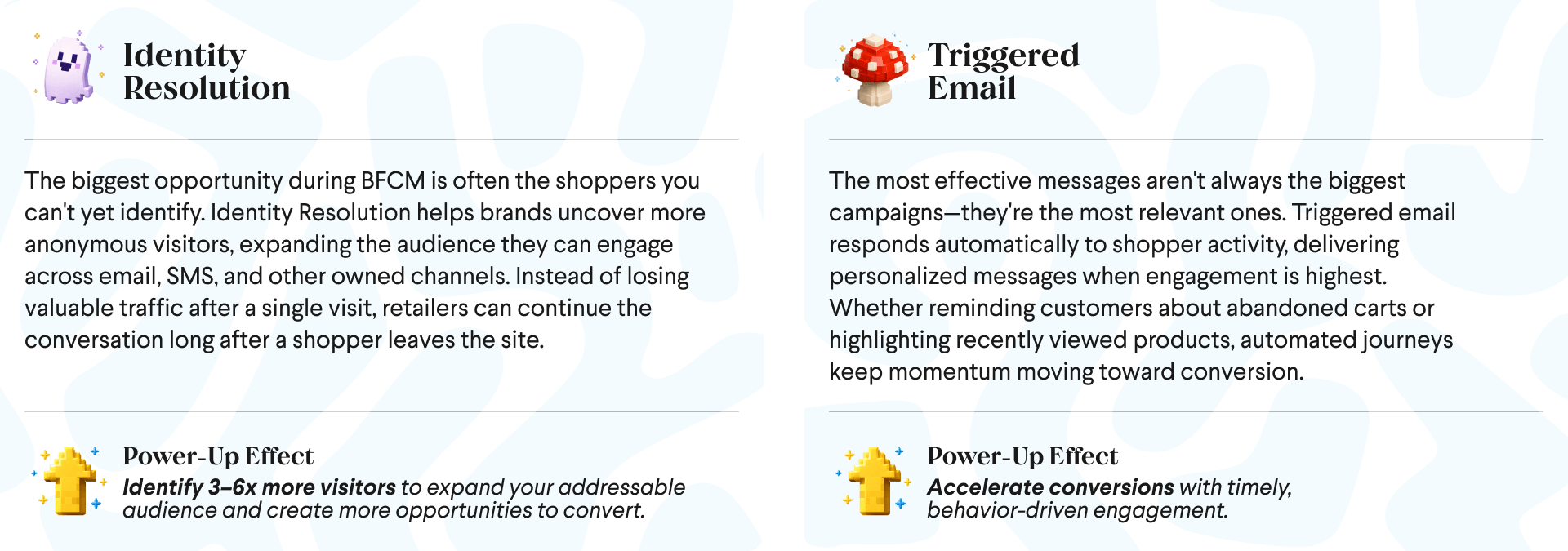
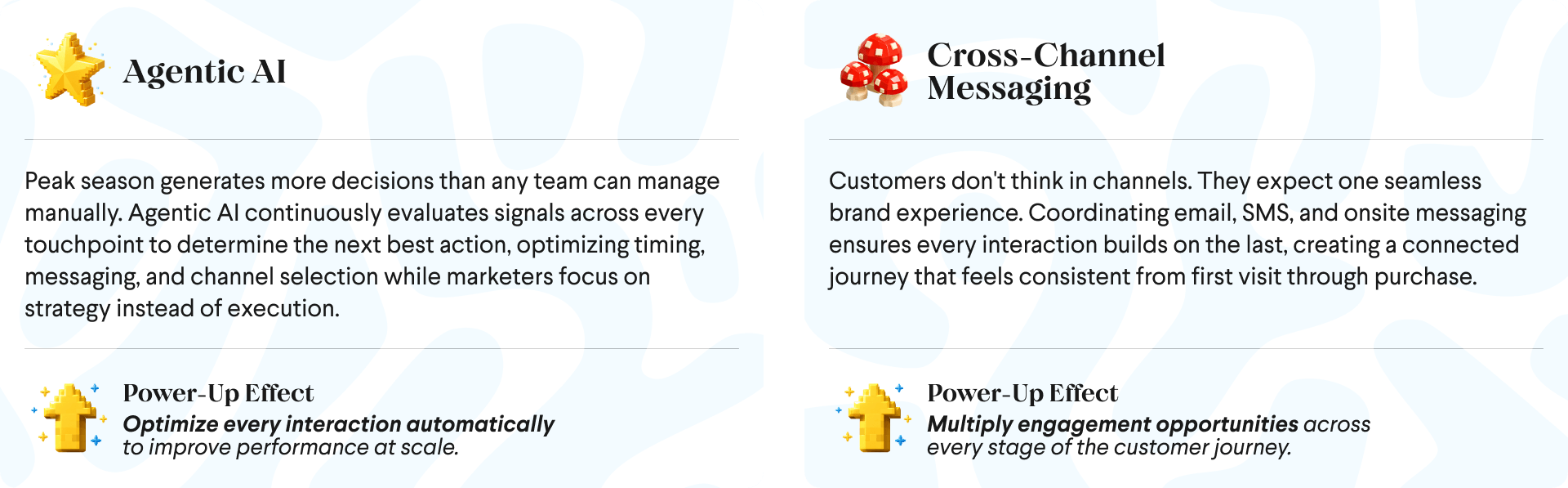

The most successful retailers don't rely on a single competitive advantage. They combine identity, intelligent decision-making, coordinated messaging, and actionable insights to create customer experiences that outperform the competition at every stage of the journey.
With the right power-ups in place, the next advantage isn't working harder, it's finding the shortcuts that help you reach the finish line faster.
Taking the Shortcuts

Finding The Fastest Route to the Podium
The fastest racers don't simply drive harder, they know where to find the shortest route around the track. Winning retailers think the same way.
While many brands compete by increasing budgets or offering deeper discounts, the strongest performers focus on removing friction from every stage of the customer journey. They identify opportunities earlier, automate intelligently, coordinate every channel, and continue building value long after Cyber Week has ended.
These five shortcuts can help you accelerate performance without increasing complexity.
 Shortcut #1
Expand Your Addressable AudienceEvery visitor who leaves unidentified is a missed opportunity to build a relationship. Growing your addressable audience before peak season gives your team more opportunities to engage shoppers across owned channels, recover abandoned journeys, and reduce dependence on increasingly expensive paid acquisition. |
|
Take the ShortcutIncrease visitor identification before peak season. Optimize email and SMS capture across key onsite experiences. The AdvantageA larger audience you can engage throughout BFCM and beyond. |
Shortcut #2
Start Building Demand EarlierThe starting lights don't turn green on Black Friday. Consumers begin researching, comparing products, and signing up for offers weeks before major promotions begin. Brands that engage shoppers early have more time to build trust, grow their audiences, and influence purchasing decisions before competitors crowd the market. |
|
Take the ShortcutLaunch audience growth campaigns before November. Reward early engagement with exclusive access, loyalty benefits, or VIP experiences. The AdvantageStronger audience growth and lower acquisition costs before peak demand arrives. |
Shortcut #3
Let Automation Do the Heavy LiftingPeak season moves too quickly for manual campaign management. Automated journeys ensure your customers receive relevant communications based on their actions, not your campaign calendar. Whether recovering abandoned carts or following up after product views, automation keeps customers moving toward purchase without increasing your team's workload. |
|
Take the ShortcutAudit every triggered journey before Cyber Week. The AdvantageMore consistent engagement with less manual effort. |
Shortcut #4
Think Beyond Individual ChannelsCustomers don't distinguish between email, SMS, and your website. They experience one brand. Connecting every touchpoint creates a smoother journey, reinforces your message, and gives shoppers multiple opportunities to engage without creating unnecessary noise. |
|
Take the ShortcutCoordinate messaging across email, SMS, and onsite experiences. Align timing, creative, and offers across every channel. The AdvantageA more consistent customer experience and stronger campaign performance. |
Shortcut #5
Keep the Momentum GoingCrossing the finish line shouldn't be the end of the relationship. For many brands, BFCM delivers thousands of first-time customers. The retailers that continue communicating after Cyber Week are the ones most likely to turn one-time holiday buyers into loyal, repeat customers. |
|
Take the ShortcutLaunch post-purchase journeys immediately after the sale. Personalize follow-up recommendations and loyalty offers. The AdvantageHigher customer lifetime value and more sustainable revenue throughout the year. |
You've built the strategy, equipped your team and identified the fastest route to success. Now it's time to put it all into action with a race-day plan that keeps every team aligned from the countdown to the checkered flag.
The Final Lap
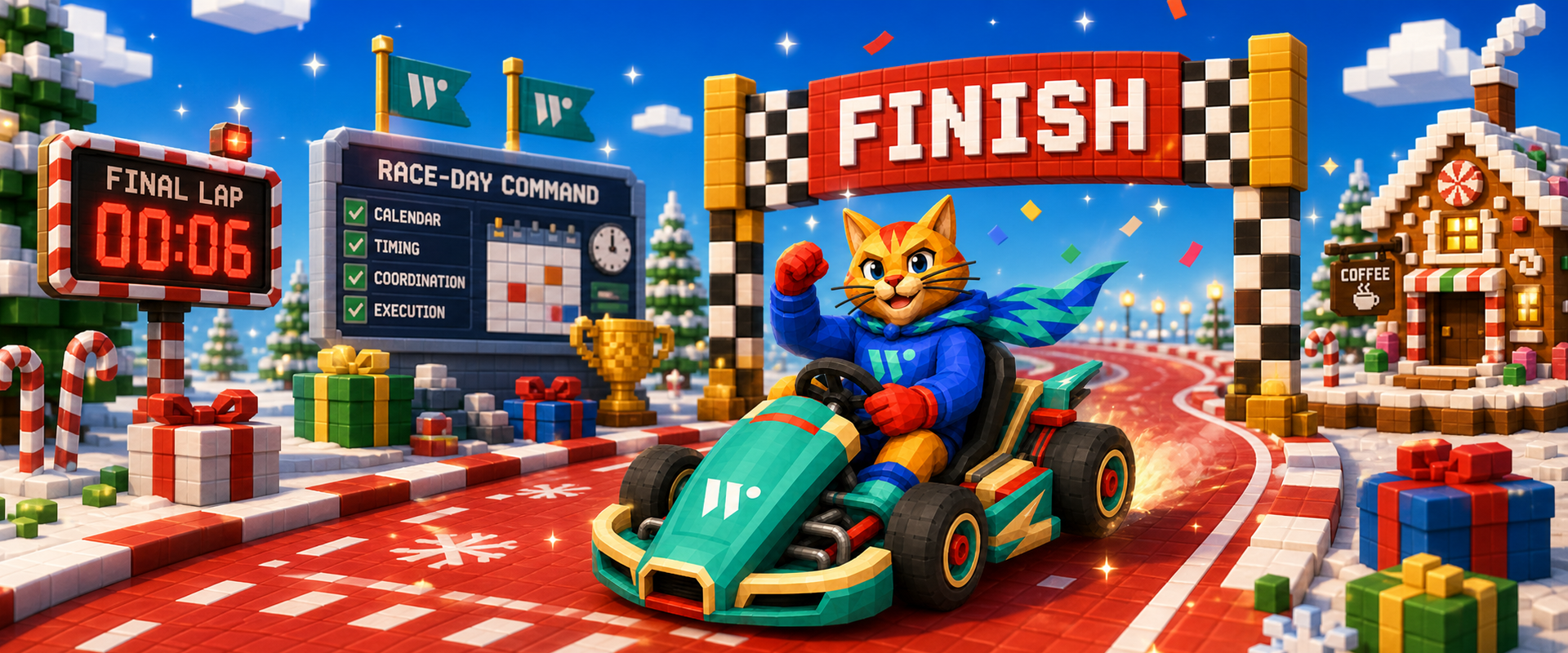
It's Time to Put the Plan into Action
By now, you've assessed the track, prepared your kart, collected your power-ups, and identified the fastest route to the finish. Now it's time to execute.
The retailers that outperform during BFCM don't make their biggest decisions on Black Friday. They prepare weeks in advance, align their teams around a clear plan, and make thoughtful adjustments as conditions evolve.
Here's a practical execution plan for every stage of the season.
60 Days Before Race Day: Build Your Starting Position
The strongest BFCM campaigns begin long before November. Focus on building the audience, data, and creative foundations you'll rely on throughout peak season.
Key Priorities
● Grow your email and SMS audiences.● Increase visitor identification.
● Review audience segmentation.
● Test creative, messaging, and onsite experiences.
30 Days Before Race Day: Fine-Tune Your Strategy
With the foundation in place, shift your focus to execution. Every campaign, journey, and promotion should be tested, optimized, and ready to launch.
Key Priorities
● Finalize promotional offers.● Build and quality-assure automated journeys.
● Align email, SMS, and onsite campaigns.
● Confirm reporting dashboards and success metrics.
Black Friday Weekend: Stay Ahead of the Pack
When the race begins, speed and agility become your competitive advantage. Monitor performance continuously, respond quickly to changing shopper behavior, and focus your efforts where they'll have the greatest impact.
Key Priorities
● Monitor campaign performance throughout the weekend.● Optimize messaging, offers, and channel mix.
● Prioritize high-value and high-intent audiences.
● Keep cross-functional teams aligned.
After the Checkered Flag: Turn Peak Buyers into Loyal Customers
Cyber Week may be over, but the opportunity is just beginning. The brands that continue engaging new customers after the holidays are the ones that maximize long-term revenue.
Key Priorities
● Launch post-purchase and welcome journeys.● Personalize recommendations based on recent purchases.
● Introduce loyalty, referral, and VIP programs.
● Measure retention alongside seasonal revenue.
Before The Race Begins, Ask Yourself:
✓ Have we grown our addressable audience ahead of peak season?
✓ Are our automated journeys fully tested and optimized?
✓ Is every owned channel working together?
✓ Can we identify opportunities and adjust quickly during Cyber Week?
✓ Do we have a plan to retain holiday customers after their first purchase?

Victory Lap
The brands that win BFCM don't rely on luck, they prepare for every turn.
They understand that success isn't determined by a bigger discount, a larger media budget, or a higher volume of campaigns. It's built through preparation, smarter decision-making, and the ability to create meaningful customer experiences when they matter most.
As this year's race has shown, the track is more demanding than ever. Consumers are more selective with their spending. Acquisition costs continue to rise. Customer journeys are longer, less predictable, and spread across more channels than ever before. In this environment, reacting faster isn't enough.
The retailers pulling ahead aren't simply responding faster, they're anticipating what's next. They identify opportunities earlier, connect every customer interaction, and use data to make more confident decisions throughout the season. Instead of treating email, SMS, AI, analytics, and identity as separate initiatives, they bring every capability together to create one coordinated strategy. Most importantly, they understand that Black Friday and Cyber Monday are not the finish line.
Every new subscriber, every first purchase, and every customer interaction is an opportunity to build a stronger relationship. The retailers that outperform year after year don't view BFCM as a four-day event, they use it as the starting point for greater customer loyalty, stronger lifetime value, and more sustainable revenue throughout the year.
The checkered flag may signal the end of Cyber Week, but it also marks the beginning of your next opportunity.
The question isn't whether the race will become more competitive next year. It will. The question is whether you'll be ready when the lights go out. Because victory doesn't belong to the fastest brand. One last chIt belongs to the one that's best prepared.